Rodent intrusions in residential attic spaces leave behind urine residue, pheromone trails, and biological droppings that compromise conditioned indoor air. Simply removing roof rats or mice without addressing the…
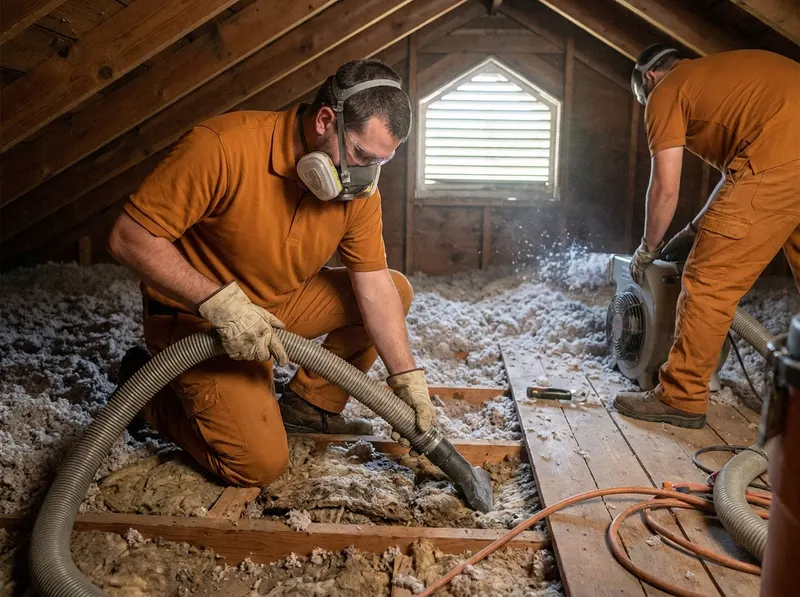
Rodent intrusions in residential attic spaces leave behind urine residue, pheromone trails, and biological droppings that compromise conditioned indoor air. Simply removing roof rats or mice without addressing the attic cavity leaves airborne bio-contaminants that filter down through ceiling fixtures and HVAC returns. Complete remediation involves establishing negative-air containment, extracting soiled cellulose or fiberglass down to bare joists, and applying low-toxicity antimicrobial fog to neutralize biological pathogens and odor markers before installing clean thermal materials.
In hillside communities bordering open chaparral—such as Friendly Hills, Savage Canyon, and properties near Turnbull Canyon or the Hellman Park Trailhead—roof rats frequently transition from avocado and citrus canopies into attic vents. Meanwhile, historic properties throughout the Hadley-Greenleaf Historic District and Uptown Whittier often feature original, settled insulation that holds decades of dust and pest pheromones. Replacing compressed batting with fresh R-30 or R-38 insulation rebalances thermal performance against hot East Whittier summers while eliminating the scent cues that invite future rodent colonies.
Every job gets a firm, written price after a free on-site visit.
Tell us about your attic decontamination and insulation restoration job in Whittier and we'll send a clear, written quote — usually the same day.
 Brevano Pest Control Services